Choosing the right tax regime is one of the most important decisions when filing your Income Tax Return (ITR). The option you select can directly affect how much tax you pay and how much money you save. For the Financial Year (FY) 2026-27, taxpayers should carefully compare both regimes before making a decision.
The old tax regime offers several deductions and exemptions, while the new regime provides lower tax rates with fewer tax-saving benefits. This guide explains the differences, helps you understand the tax slabs, and shows how to decide which option best suits your financial situation.
Understanding the Two Tax Regimes
The Government of India allows eligible individual taxpayers to choose between two methods of taxation.
Old Tax Regime
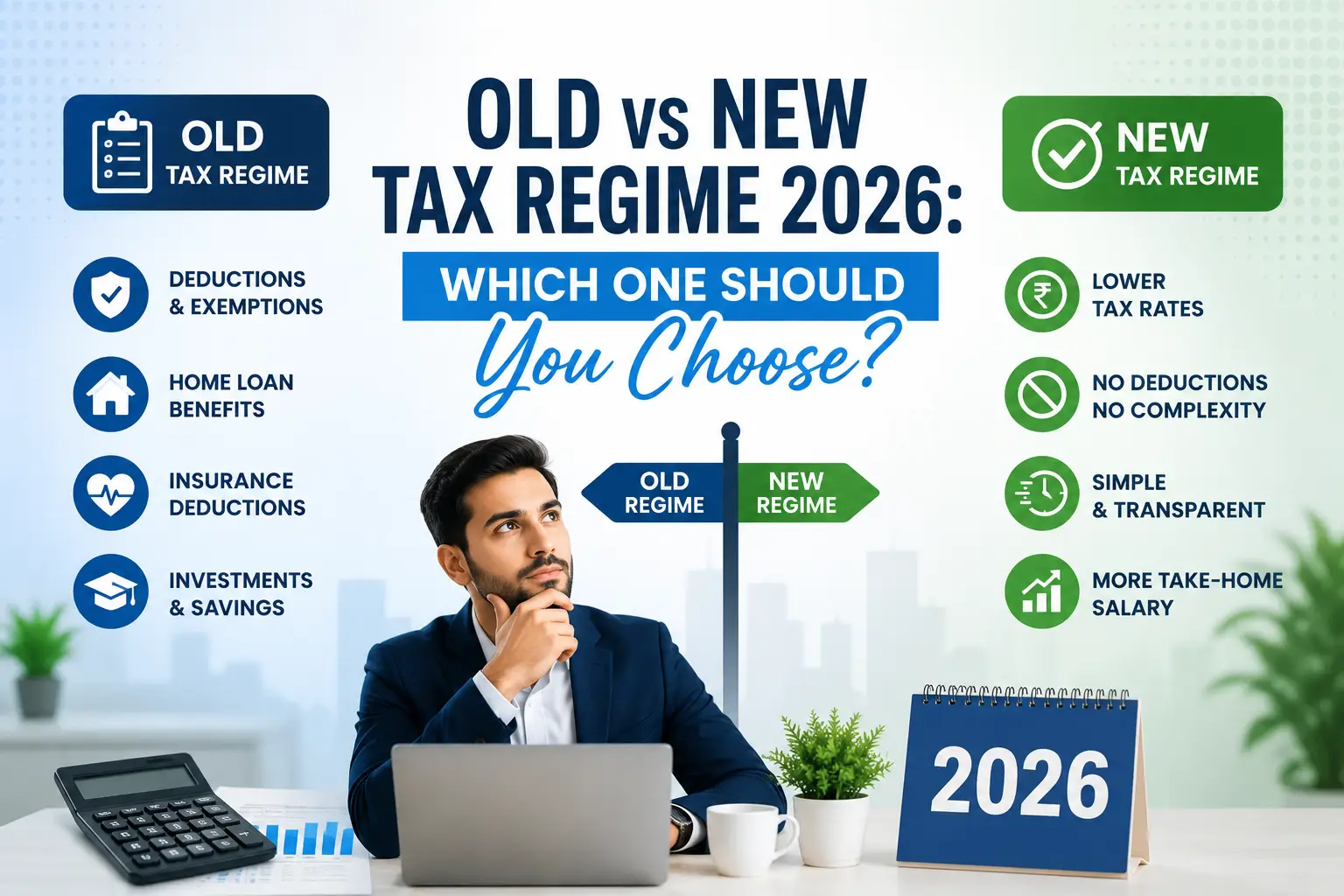
The old regime lets taxpayers reduce taxable income by claiming various deductions and exemptions available under the Income Tax Act. It is often preferred by people who actively invest in tax-saving instruments or receive multiple allowances from their employer.
New Tax Regime
The new regime follows a simpler approach. It offers lower income tax rates but removes most deductions and exemptions. Since it has become the default option for many taxpayers, understanding its benefits is essential before filing your return.
The best choice depends on your salary structure, investments, and eligible deductions.
New Tax Regime Slabs 2026-27
For FY 2026-27, the government continues to offer progressive tax slabs under the new regime. Tax rates increase as income increases, making the system easier to understand for most salaried and self-employed individuals.
While tax slabs may be updated through the Union Budget, taxpayers should always verify the latest rates before filing their return.
A lower tax rate does not automatically mean lower tax liability. If you qualify for significant deductions under the old regime, your final tax payable may still be lower there.
Old Tax Regime Deductions List
One of the biggest advantages of the old regime is the wide range of deductions available. These deductions help reduce taxable income legally.
Some commonly claimed deductions include:
- Section 80C Investments
Investments such as Public Provident Fund (PPF), Employee Provident Fund (EPF), ELSS mutual funds, life insurance premiums, and tax-saving fixed deposits may qualify under Section 80C, subject to applicable limits. - Section 80D Health Insurance
Premiums paid for health insurance for yourself and eligible family members can provide additional tax benefits. - Home Loan Benefits
Taxpayers with a home loan may claim eligible deductions on both principal repayment and interest, depending on applicable provisions. - House Rent Allowance (HRA)
Salaried employees who pay rent and satisfy the required conditions may claim HRA exemption under the old regime. - Leave Travel Allowance (LTA) and Other Exemptions
Certain salary components and allowances may also qualify for tax benefits if eligibility conditions are met.
These deductions make the old regime attractive for taxpayers who regularly invest and maintain proper documentation.
Which Tax Regime Is Better for Salaried Employees?
There is no single answer because every taxpayer has a different financial profile.
The old regime may be suitable if you:
- Regularly claim multiple deductions.
- Contribute significantly to tax-saving investments.
- Have a home loan with eligible tax benefits.
- Receive HRA and other exempt salary allowances.
The new regime may be suitable if you:
- Do not invest specifically for tax savings.
- Prefer a simpler tax filing process.
- Have limited eligible deductions.
- Want straightforward tax calculations with fewer compliance requirements.
Instead of selecting a regime based on tax rates alone, calculate your taxable income under both options before making a decision.
How to Choose the Right Tax Regime
Making the right choice becomes easier when you compare your actual tax liability.
Consider these practical steps:
- Calculate your total annual income
Include salary, business income, rental income, interest income, and other taxable sources. - List all eligible deductions
Estimate deductions available under the old regime, including investments and insurance premiums. - Compare tax liability under both regimes
Calculate the final tax payable after considering deductions instead of comparing tax rates alone. - Review your future financial plans
If you plan to purchase a house or increase long-term investments, the old regime may become more beneficial over time.
Taking a few minutes to compare both options can help you avoid paying unnecessary tax.
Should You Use a Tax Regime Calculator 2026?
Yes. A reliable tax regime calculator can provide a quick comparison between both options using your actual income and deductions.
A calculator helps you:
- Estimate tax under each regime.
- Compare savings instantly.
- Identify whether deductions make a significant difference.
- Make a more informed filing decision.
Remember that calculators provide estimates. If your income includes multiple sources or complex deductions, professional guidance is often beneficial.
How to Choose Tax Regime While Filing ITR
Many taxpayers wait until they start filing their Income Tax Return before deciding. This can lead to mistakes or missed tax-saving opportunities.
Before submitting your return:
- Gather salary documents, investment proofs, and interest statements.
- Review all eligible deductions carefully.
- Compare both tax regimes using actual figures.
- Confirm your eligibility based on your income type.
- File your return only after selecting the option that results in the lower tax liability.
Planning before the filing deadline gives you enough time to make the right choice.
Common Mistakes to Avoid
Many taxpayers unknowingly pay more tax because of avoidable errors.
Some common mistakes include:
- Choosing a regime without comparing both options.
- Assuming lower tax rates always mean lower tax.
- Forgetting eligible deductions.
- Ignoring changes in salary during the financial year.
- Relying on estimates instead of actual financial records.
Avoiding these mistakes can make your tax filing more accurate and stress-free.
Conclusion
Both tax regimes have their own advantages. The right choice depends on your income, deductions, investments, and financial goals. Instead of following a general recommendation, compare your tax liability under both options before filing your return for FY 2026-27.
If you need expert guidance, our team at TaxFend can help you evaluate your tax situation, choose the most suitable regime, and file your return accurately. Explore our Income Tax Filing service to get professional assistance with your ITR.
Ready to file your Income Tax Return? Contact TaxFend today to schedule a consultation or connect with our team on WhatsApp for expert assistance.
Frequently Asked Questions
1. Can I switch between the old and new tax regimes every year?
Eligibility to switch depends on the type of taxpayer and the source of income. Salaried individuals generally have more flexibility than taxpayers with business or professional income. Always review the applicable income tax rules before making a decision.
2. Is the new tax regime mandatory for FY 2026-27?
No. Although it is the default regime for many taxpayers, eligible individuals can choose the old regime if it provides better tax benefits and they satisfy the applicable conditions.
3. Which documents should I keep before comparing tax regimes?
Keep your salary slips, Form 16, investment proofs, health insurance receipts, home loan statements, bank interest certificates, and other income records ready for accurate tax calculations.
4. Can deductions under Section 80C be claimed in the new tax regime?
Most deductions available under Section 80C cannot be claimed under the new regime. Taxpayers should verify the latest provisions applicable for the relevant financial year.
5. When should I decide which tax regime to select?
It is best to compare both options before filing your Income Tax Return rather than waiting until the last moment. Early planning helps you identify eligible deductions and avoid unnecessary tax payments.